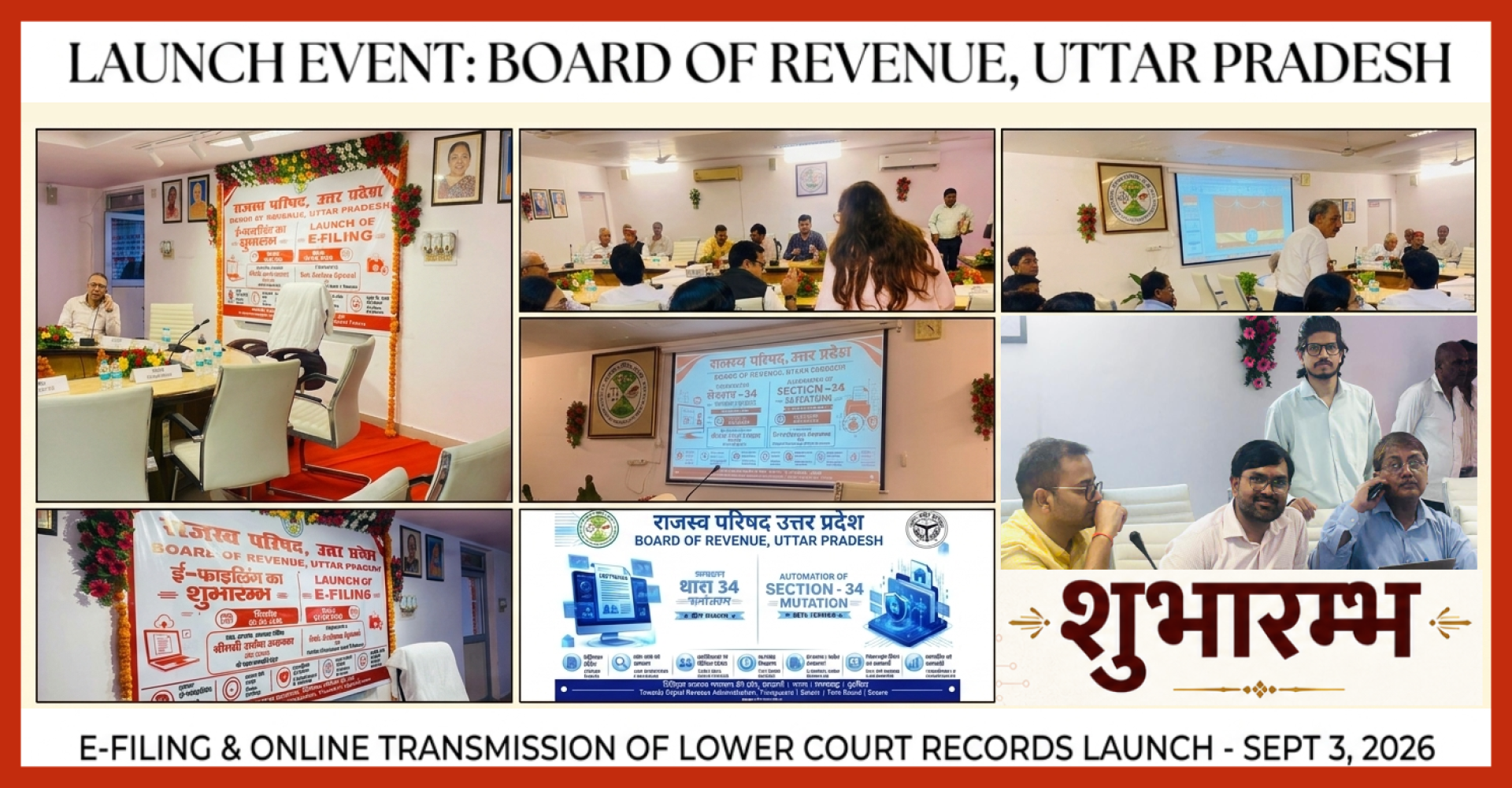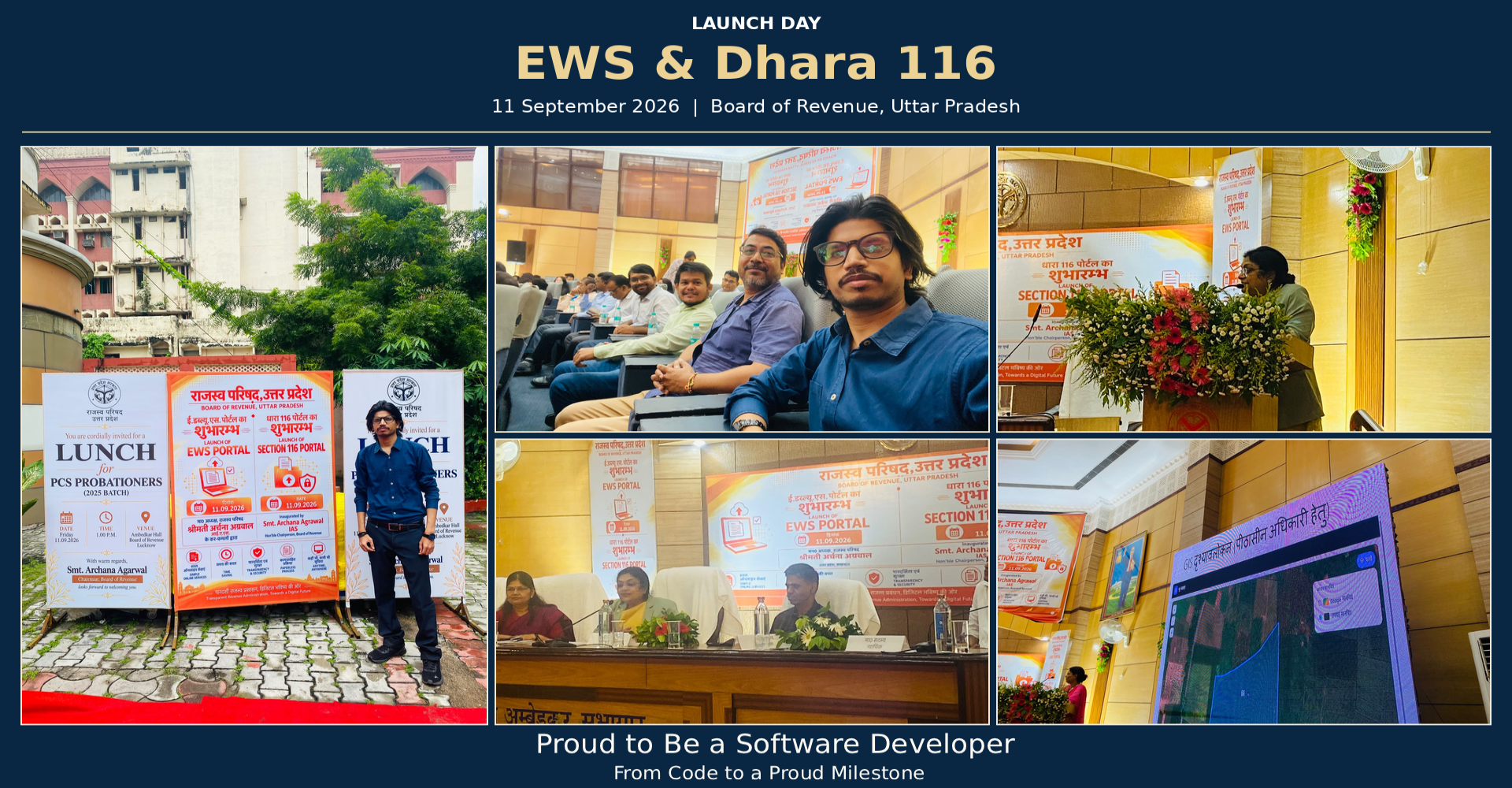
11 September 2026 marked one of the most memorable milestones in my journey as a Software Developer.
As developers, we spend countless hours understanding requirements, designing workflows, writing code, working with databases, debugging issues, testing features, and continuously improving applications. But seeing a system you helped develop being officially launched and moving into real-world use is an entirely different experience.
I had the opportunity to work as a Software Developer on the EWS Portal and Section 116 Portal projects for the Board of Revenue, Uttar Pradesh.
Being part of the development journey of these digital platforms has been both a valuable professional experience and a proud moment for me.
EWS Portal – Supporting Digital Governance
The EWS Portal has been developed to help digitize and streamline the associated administrative processes.
My role as a developer went beyond simply creating screens and forms. It involved understanding departmental requirements, translating administrative workflows into software functionality, managing data flow, implementing business processes, and ensuring that the system remained practical and easy to use for its intended users.
Government applications are especially meaningful because every workflow and feature eventually becomes part of a real administrative process.
Section 116 Portal – Digitizing the Kurra Batwara Process
The Section 116 Portal has been one of the particularly significant parts of this journey.
The system supports the digital processing and tracking of cases related to Kurra Batwara (land partition) under Section 116.
Citizens can submit applications through the Citizen Portal, provide the required land and party details, and upload relevant PDF documents and supporting records online.
The system also provides an e-Book-based document review mechanism, allowing uploaded documents to be viewed and verified sequentially before the application is finally submitted.
This helps make the application process more structured and digitally manageable.
Citizen Dashboard & Application Tracking
One of the important features of the Section 116 system is the dedicated Citizen Dashboard.
After submitting an application, citizens can track the progress of their case online and view important updates related to the proceedings.
The objective is to provide greater visibility into the application process so that citizens can understand the current status of their case and the important actions or dates associated with it.
Hearing Date & SMS Notifications
When the case reaches the appropriate stage, the SDM can schedule the hearing date through the system.
Once the hearing date is scheduled, the information becomes available through the Citizen Dashboard.
The workflow also supports SMS notifications to the plaintiff and concerned defendants, helping ensure that the relevant parties receive information regarding the scheduled hearing.
This creates a more structured communication channel between the administrative process and the parties involved in the case.
Lekhpal Visit Tracking
Field inspection is another important stage in the Section 116 workflow.
The concerned Lekhpal can schedule a Visit Date for the required field inspection.
Once the visit date is entered into the system, the concerned parties can receive an SMS notification informing them about the proposed inspection date.
At the same time, the information remains available within the system, enabling the concerned administrative authorities to monitor the progress of the case.
The portal therefore goes beyond simply accepting online applications—it helps connect multiple stages of the administrative workflow through a common digital platform.
What Launch Day Means to a Developer
As software developers, most of our work happens behind the scenes.
We spend our days surrounded by code editors, databases, APIs, stored procedures, testing environments, bug reports, changing requirements, and endless debugging sessions.
A feature that appears simple to an end user may represent hours—or sometimes days—of development, testing, discussion, and refinement.
That is why seeing the software running in a real environment on Launch Day carries a very different feeling.
The launch of the EWS Portal and Section 116 Portal on 11 September 2026 represented more than the release of software for me.
It represented the journey behind it—the requirements, discussions, development, database work, testing, debugging, corrections, challenges, and countless hours spent turning an idea and administrative workflow into a functioning digital system.
When Code Creates Real-World Impact
One of the biggest lessons I take from projects like these is that the true value of technology is not measured only by the programming languages, frameworks, or architecture behind it.
Its real value emerges when technology helps simplify an actual process, improves the flow of information, increases transparency, and enables better interaction between citizens and administration.
Working on the EWS and Section 116 projects has given me another opportunity to see how software development can contribute to real-world digital governance.
There is still always more to learn, improve, and build—but seeing your code become part of a functioning system is a milestone worth remembering.
Proud to Be a Software Developer
For everyone else, these photographs may represent a launch event.
For me, they represent the journey from requirements to code, from code to deployment, and from deployment to a real-world system.
Proud to have contributed as a Software Developer to the EWS Portal and Section 116 Portal.
From Code to a Proud Milestone.
EWS Portal & Section 116 Portal
Board of Revenue, Uttar Pradesh
Launch Day: 11 September 2026